
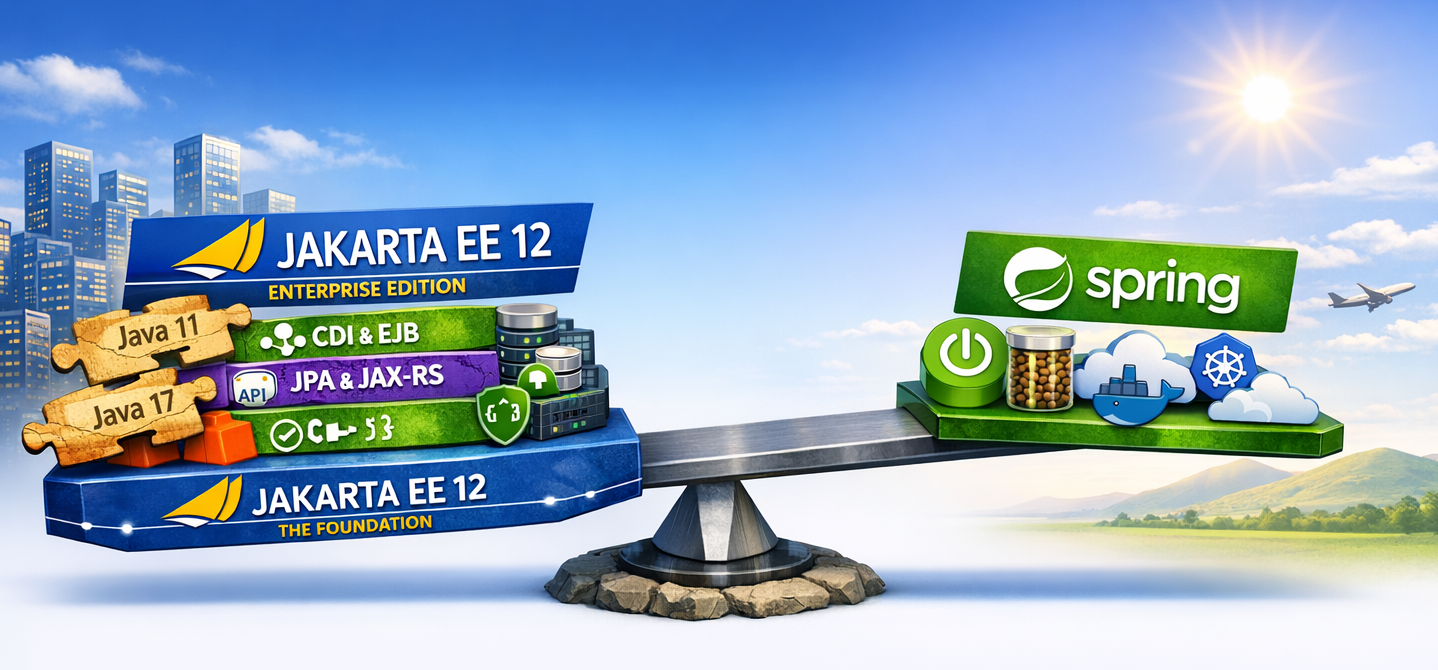
Jakarta EE and Spring Boot are the two de facto frameworks when developing enterprise Java applications. They are both very powerful frameworks. However, they have different design philosophies and cater to different development needs.
-
Jakarta EE takes a standards-based approach that offers greater flexibility and customisation. This makes JEE ideal for projects with a tailored stack. Using JEE leads to standardised, vendor-neutral software that large enterprises demand.
-
Spring Boot is designed for fast development, especially for applications that conform to the Spring conventions.
Choices, choices…
The competition between them to secure more market share has been going on for a while. Interestingly, many Spring APIs are built on, or directly use, Jakarta EE specifications.
Spring uses the Jakarta specs under the hood. Most Spring developers use the Jakarta EE APIs every day without even realising it. These APIs include Jakarta Persistence (JPA) or Jakarta Validation.
Conversely, Jakarta adopts some patterns (like repositories) that Spring has popularised.
Spring is generally used as the UI (user interface) of an Java enterprise app.Jakarta EE is the engine that powers almost everything under the hood.
The Spring vs. Jakarta EE debate isn’t about which is better, but rather which philosophy fits your project:
-
Choose Spring Boot if you’re building a brand-new microservice, need to integrate with AI tomorrow, or want the fastest time to market.
-
Choose Jakarta EE if you’re working in a highly regulated industry (banking, government, etc.), need long-term (10+ years) stability, or don’t want to be tied to a single vendor. Jakarta EE focuses on standardization, compatibility and long-term stability across vendors.
Learning and Growth
Currently, many enterprise applications rely on Jakarta EE. However, most junior developers are only familiar with Spring Boot.
If you’re a skilled Spring Boot developer, learning Jakarta EE can be a solid strategic move. It will enhance your knowledge and broaden your expertise in the Java ecosystem. Being skilled in both frameworks will make you a more versatile developer and can open up more job opportunities. This can increase your competitive edge, and make you a valuable asset in the job market.
Final Thoughts and Signing Off
There is a good blog entry on how to choose the right framework for your project on the Payara website at Jakarta EE vs. Spring Boot: Choosing the Right Framework for Your Project
Was this interesting? Please share your comments, and as always, stay safe and keep learning!