
In the days before Google Maps on the cell phone, I bought a real GPS device. Given how easily I get lost, the TomTom was very helpful. So helpful, in fact, that I often thanked it for the instructions.
This wasn’t me being weird. This was just conditioned behaviour. Someone helps you, you say “thank you”.
Over time I stopped doing that. Now I only talk to Google Maps when I disagree with it.
Thank you, ChatGPT
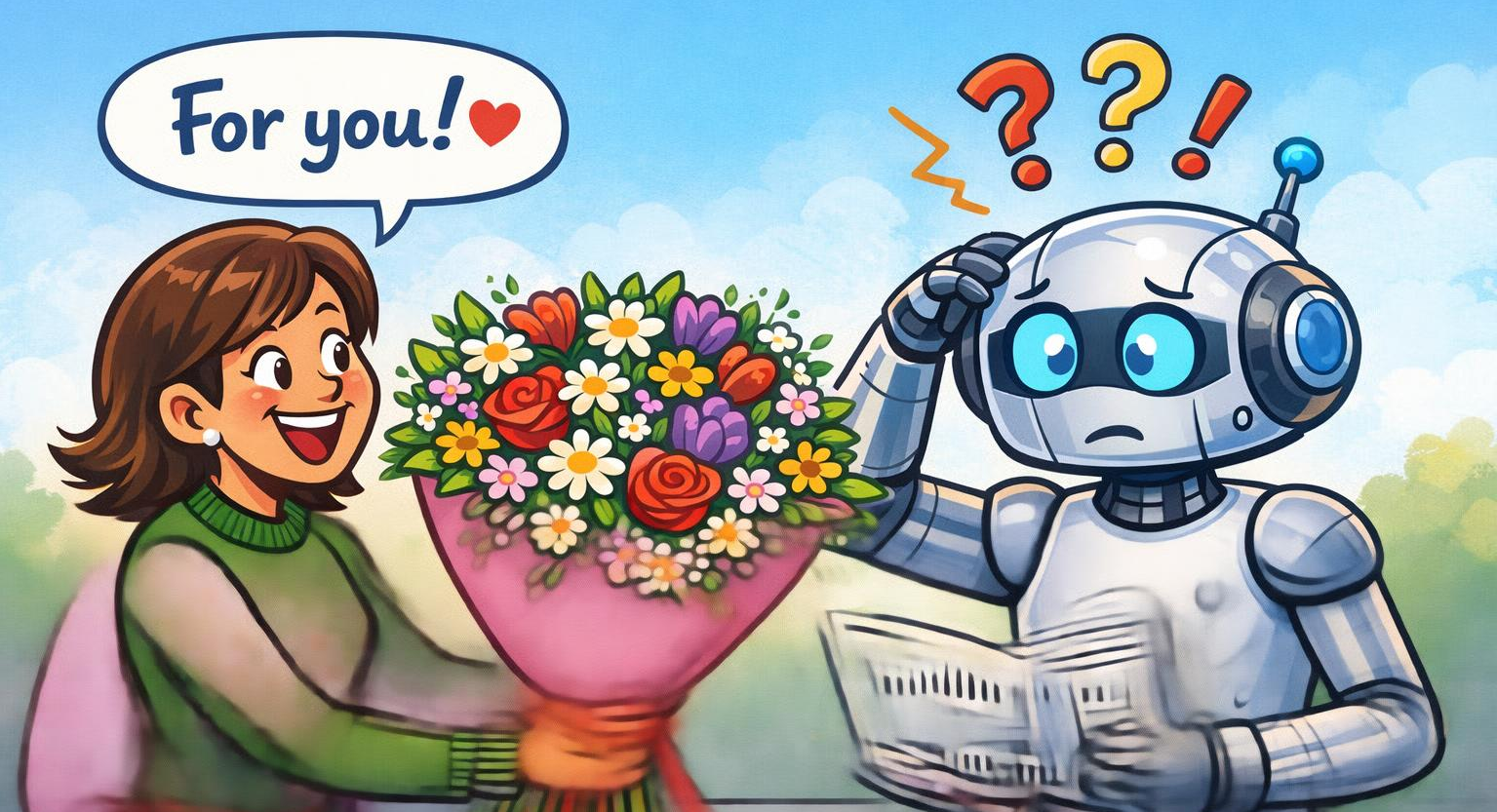
What about AI? Do you use “please” and “thank you” when you ask ChatGPT for information? Does it make a difference?
If you are polite to your AI, you are not alone. According to a 2025 survey, 70% of people are polite to AI. Most said it’s just the right thing to do. Twelve percent said they do it to protect themselves in case of robot uprisings. That sounds like long-term survival planning. And it’s cheaper than building a bunker.
From nice to nasty
I was fascinated by how inconsistent the research results seem. Of course, AI changes so quickly that any research is outdated before you’ve finished reading it.
Research in 2024 showed that rude prompts could lead to worse performance. Unless you were Japanese. Chatbots using Japanese did slightly worse if you were too courteous.
This same research showed that if you made AI pretend it was on Star Trek, maths results improved. That’s surprising. But I’m more surprised that anyone came up with the idea to try it.
A different 2025 study showed that AI gave more accurate responses to rude prompts. And that was using ChatGPT, not Grok. The researchers warned, however, that rudeness could have negative effects on user experience.
A November 2025 study showed that impolite prompts resulted in worse results for general tasks. A 2026 study showed hyper-direct, almost rude, prompts are better for logic tasks.
Manners maybe maketh mastery
I asked three LLMs whether politeness affects the accuracy of the response.
- Co-Pilot is unequivocal: Politeness doesn’t make it smarter.
- ChatGPT claims that polite prompts can lead to more helpful and detailed responses.
- Gemini agrees that polite responses will produce longer, warmer results with more detail. But it goes further and claims that polite prompts will tend to pull results from datasets with a similar tone. These are professional, neutral inputs, and often of a higher quality.
But Gemini is not unequivocal. It offered two corrolaries:
-
Direct, almost rude, prompts will lead to shorter outputs with higher accuracy. These are best for coding, maths, and technical logic.
-
Urgent prompts with emotional significance can lead to even better performance for high-stakes tasks.
Good manners do cost
Saying thank you to the teller who helps you costs nothing.
Saying thank you to AI may cost something.
AI models process text in tokens — tiny chunks of words. The more tokens to process, the more computing power required, and the greater the cost.
For an individual, the extra cost is tiny. For a company, it can add up. Sam Altman claimed politeness costs “tens of millions of dollars”. If that’s true, why aren’t big corporates telling us to be rude?
Maybe because polite interaction with AI improves user satisfaction. AI mirrors our tone. So polite prompts result in polite responses. When AI is nice back to us, it makes us happy.
It’s basically customer service, but without the hold music.
Yay! Spelling matters
Poor grammar, spelling, and punctuation matter far more than politeness. (This makes the grammar police person in me very happy.)
This makes sense, because good prompts need clarity. LLMs rely on patterns in language. When your prompt breaks those patterns by using bad grammar or spelling, AI has to guess your intent. Sometimes it guesses correctly. Sometimes it goes on a little adventure of its own. Sometimes it goes on your adventure, but in the wrong direction.
It’s not just about AI
The 2025 study warned against rudeness for another reason. Bad behaviour with AI might normalise bad behavior, and lead to toxic interactions with humans.
Many users use “thank you” because it aligns with their personal values. So if politeness helps you stay human in a digital world, keep doing that.
Because while AI won’t remember your kindness, the people around you will. (And unlike AI, they can hold a grudge.)
Are you nice or nasty to your AI? Do you think it matters?